
TL;DR
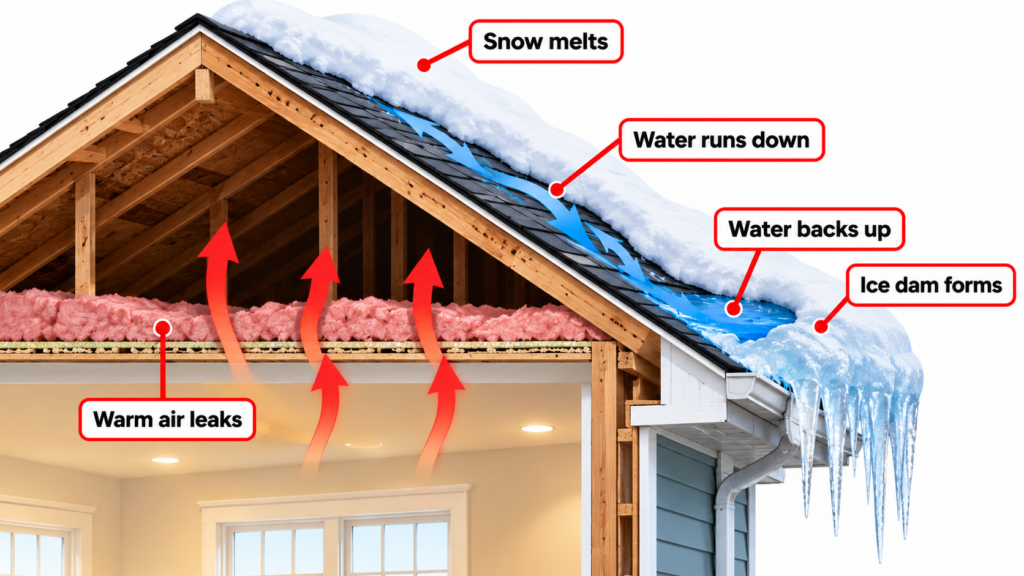
Ice dams form when heat leaking from your living space warms the upper roof and melts snow, which refreezes at the colder eaves.
In Duluth, where snow cover often lasts from November into April, the lasting fix is sealing attic air leaks first, then adding insulation toward ENERGY STAR’s R60 target for Climate Zone 7.
Roof rakes, heat cables, and ice and water barriers only limit the damage.
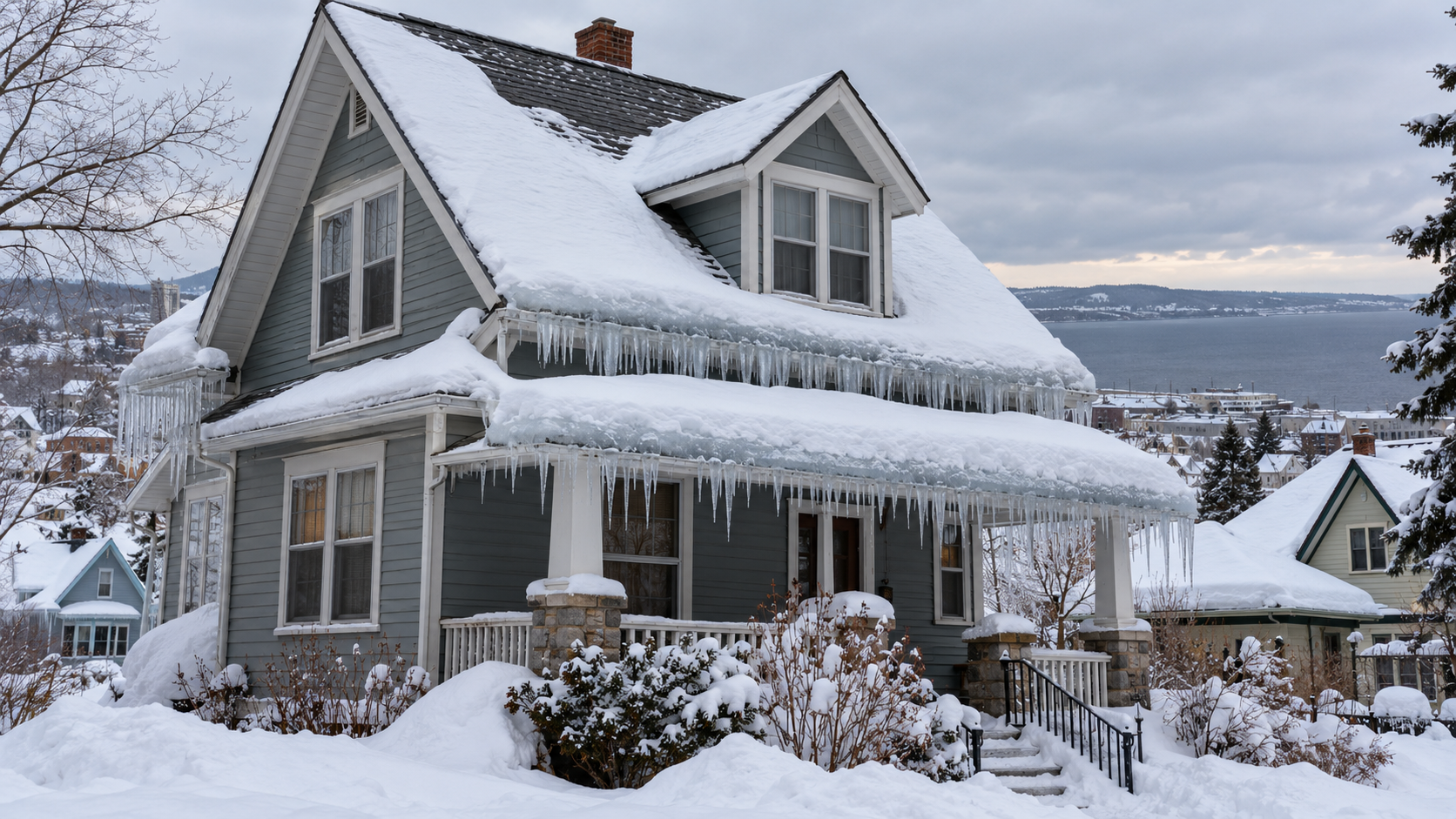
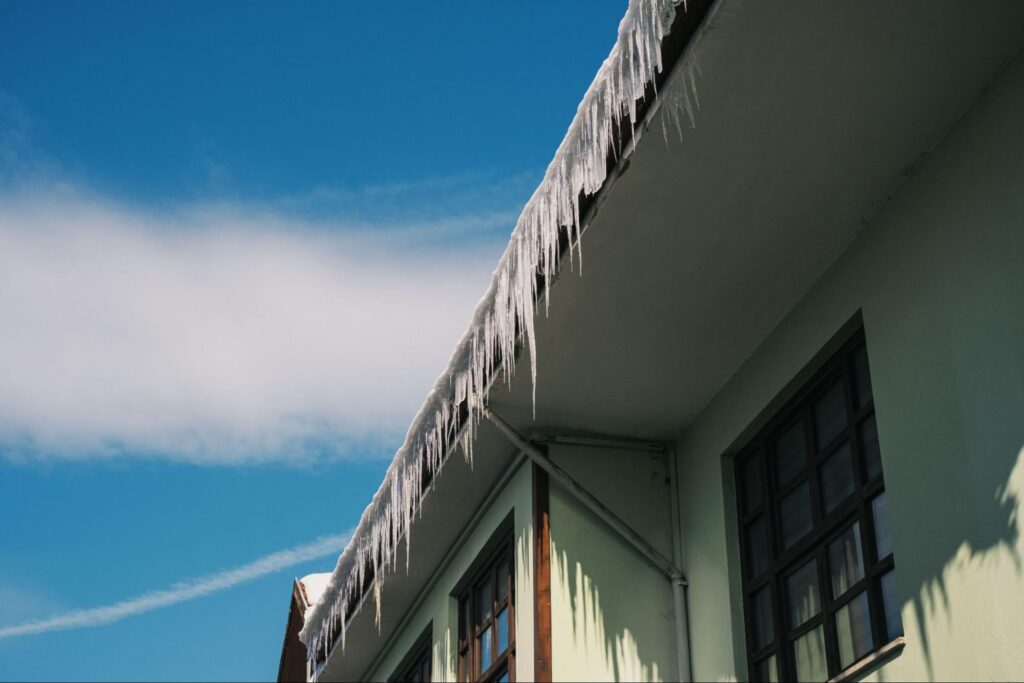
After a few sunny January days, icicles often start forming along the edge of the roof. Look closer, and you may spot a thick ridge of ice sitting right at the gutter line. In Duluth, that ridge is an ice dam, and the water pooling behind it is looking for a way inside.
Most people try to fight ice dams from the outside with roof rakes, heat cables, or a bag of ice melt. At best, these tools buy a little time, and some can damage shingles and gutters. If you want to know how to prevent ice dams for good, start in the attic above your living space.
This guide explains what causes ice dams, why so many Northland homes get them, and which attic and roof fixes make the biggest difference before next winter.
What Causes Ice Dams on Duluth Roofs
Ice dams form when parts of your roof stay at different temperatures for days at a time. According to the University of Minnesota Extension, three conditions must occur at the same time: snow sits on the roof, the upper roof surface warms above 32°F, and the eaves stay below freezing.
Snow on the warmer part of the roof melts and runs down the slope. When that water reaches the cold overhang past your exterior wall, it freezes. New meltwater then backs up behind the ice and can work under shingles into your attic, walls, and ceilings.
The heat that warms the upper roof almost always comes from inside the home, and Duluth’s long winters give it plenty of time to cause problems. National Weather Service records for Duluth show the first inch of snow typically falls in early November and the last in April. January averages about 11°F, and snow cover in the Arrowhead has historically lasted more than 160 days a year, so snow can sit on a warm roof for months.
Why So Many Duluth Homes Get Ice Dams
Housing age plays a major role. More than 4 in 10 Duluth homes were built before 1940, according to the City of Duluth’s 2025 housing study, long before air sealing and high insulation levels became standard building practice. Decades of patched ceilings, old light fixtures, and gaps around chimneys allow warm air to escape directly into the attic.
Story-and-a-half homes, with upstairs bedrooms tucked under the roofline, present a specific challenge. Their upper-floor rooms are often built directly beneath the roof with short knee walls and sloped ceilings. That leaves little room for insulation, and the small attic spaces behind the knee walls often stay warmer than the rest of the attic.
Duluth and the rest of St. Louis County sit in Climate Zone 7, the second-coldest of the eight U.S. climate zones in the energy code. Homes here need more attic insulation than most of the country to keep the roof deck cold.
How to Prevent Ice Dams Before Next Winter
Long-term ice dam prevention works best in a set order: seal the air leaks first, then add insulation.
Seal Air Leaks Into the Attic
Warm air leaking up from your living space is the major cause of ice dams in many homes, according to the University of Minnesota Extension, and the Minnesota Department of Commerce calls attic air leaks the primary cause. The goal is an airtight ceiling between your home and the attic. Common leak points include:
- Recessed lights and ceiling light boxes
- Plumbing vent pipes and wiring holes
- Gaps around chimneys and flues
- The attic hatch or pull-down stairs
- The tops of interior walls
ENERGY STAR advises sealing these gaps before adding insulation, since they are hard to find once covered.
Bring Insulation Up to Climate Zone 7 Levels
After the air leaks are sealed, insulation slows the heat that still moves through the ceiling. For an uninsulated attic in Climate Zone 7, ENERGY STAR recommends adding insulation to reach R60. If your attic already has 3 to 4 inches of insulation, ENERGY STAR recommends adding R49.
Sloped ceilings in story-and-a-half homes need a different plan. With so little space between the drywall and the roof deck, UMN Extension recommends insulation with a high R-value per inch (R-value measures how well insulation slows heat).
Keep Attic Ventilation Working
Natural ventilation through soffit and ridge vents helps keep the roof deck closer to outdoor temperatures. It also dries out the attic and lets summer heat escape. Insulation should never block the soffit vents, so baffles are often installed to keep that airflow path open.
Vents can only carry away heat that reaches the attic, so they work best after the leaks are sealed. Once heat loss is under control, a small amount of ventilation is enough. The University of Minnesota Extension also advises against powered attic fans for ice dams, since they can create attic moisture problems and throw off the air pressure inside your home.
Move Heat Sources Away From the Roof
Bathroom and kitchen fans that dump warm, moist air into the attic, or end just above the roof surface, can melt the snow around them. Fans should always vent outdoors, and UMN Extension notes that vents ending just above the roof may need to be moved or extended in heavy-snow areas.
What Your Roof Can and Can’t Do About Ice Dams
Your roof can’t stop an ice dam from forming, but it can limit the damage when one does. An ice and water barrier is a self-adhering membrane installed along the eaves. It seals around nails and keeps backed-up water from reaching the roof deck, and Minnesota’s residential code requires it to run from the roof edge to at least 24 inches inside your home’s exterior wall. If you’re planning a roof replacement, ask whether valleys and other problem areas should get extra coverage.
The table below compares common ice dam fixes and what each one really does.
| The Fix | What It Does | Is It a Lasting Fix? |
|---|---|---|
| Attic air sealing | Stops warm air from reaching the roof deck | Yes; do this first |
| Added insulation | Slows heat moving through the ceiling | Yes; add after air sealing |
| Soffit and ridge ventilation | Keeps the roof deck cold and the attic dry | Partly; works best with sealing and insulation |
| Ice and water barrier | Blocks backed-up water from getting under shingles | No; backup protection at eaves and valleys |
| Heat cables | Melts drain paths through ice at the edge | No; MN Commerce warns they shorten roof life and add energy costs |
| Roof rake | Pulls snow off the lower roof | No; helps drainage but doesn’t fix the heat loss causing the dam |
Every lasting fix on that list happens in the attic. The others buy time while you plan the real repair. A free roof inspection can show whether past ice dams have damaged your shingles, flashing, or roof deck, and whether your vents are doing their job.
What to Do If an Ice Dam Has Already Formed
If water is already backing up, the goal is to get it off the roof safely. A roof rake used from the ground can pull snow off the lower few feet of roof, though UMN Extension notes rakes may damage roofing materials. In an emergency, UMN suggests cutting a channel through the dam with tap water from a hose on a warmer day, working up from the bottom edge. Skip the chisels, chippers, and ice melt, since the Minnesota Department of Commerce warns they can damage shingles and gutters. For a large dam, hire a professional ice dam steaming service, and stay off a snowy roof yourself.
Ice Dam Questions From Duluth Homeowners
Can a newer home still get ice dams?
Will fixing my attic mean more snow stays on my roof?
What should I do if water from an ice dam gets inside?
Are there programs that help Duluth homeowners pay for an energy audit?
Should I call a roofer or an insulation contractor about ice dams?
Can a newer home still get ice dams?
Yes. Skylights and complex rooflines with multiple valleys and dormers raise ice dam risk even in new construction. UMN Extension recommends that new homes have a continuous air barrier through the ceiling, so no warm air leaks into the attic. A newer home built without one can still lose enough heat to melt roof snow.
Will fixing my attic mean more snow stays on my roof?
It can. Once your roof stops melting snow from below, more of it stays put through the winter. Homes built to current codes should handle that load. If your home is older or you’re unsure how much weight your roof can carry, check whether your city’s building inspections office has your home’s plans on file, then have a structural engineer review them.
What should I do if water from an ice dam gets inside?
Dry wet areas right away, since moisture from ice dams can lead to mold and mildew. Wait until ceilings and walls are completely dry before you repair drywall or paint. UMN Extension also says to fix the attic heat loss at the same time, or the same damage will likely come back next winter. If water came through damaged shingles or flashing, Empire Roofing can repair the roof leak.
Are there programs that help Duluth homeowners pay for an energy audit?
Yes. The City of Duluth lists a free Home Energy Audit for ComfortSystems and Minnesota Power customers, and Ecolibrium3 is one of the local providers. The free audit is a walk-through review of your insulation and heating system. An advanced audit adds a blower door test and infrared scan, with income-based pricing and utility rebates available. Either one is a good starting point for attic work.
Should I call a roofer or an insulation contractor about ice dams?
Often both. UMN Extension recommends a weatherization contractor who uses a blower door test to measure air leaks and may use an infrared camera to find heat loss in the ceiling. During a free roof inspection, Empire Roofing checks your shingles, flashing, roof deck, and attic ventilation for signs of ice dam trouble.
Get Ahead of Next Winter’s Ice Dams
Keeping your roof cold from the inside is what ends ice dams for good. An airtight ceiling, enough insulation, and clear vents will outlast any tool you use from the driveway, and the work is easiest to schedule before the snow returns.
If your home has been through a few winters of ice dams, it’s worth knowing what that water may have left behind. As a locally owned GAF Master Elite contractor serving the Twin Ports and the Arrowhead for more than 25 years, Empire Roofing will give you an honest look at your roof and what it needs before the next big snow. When you’re ready, schedule your free roof inspection or call Empire Roofing at (218) 724-5584.