
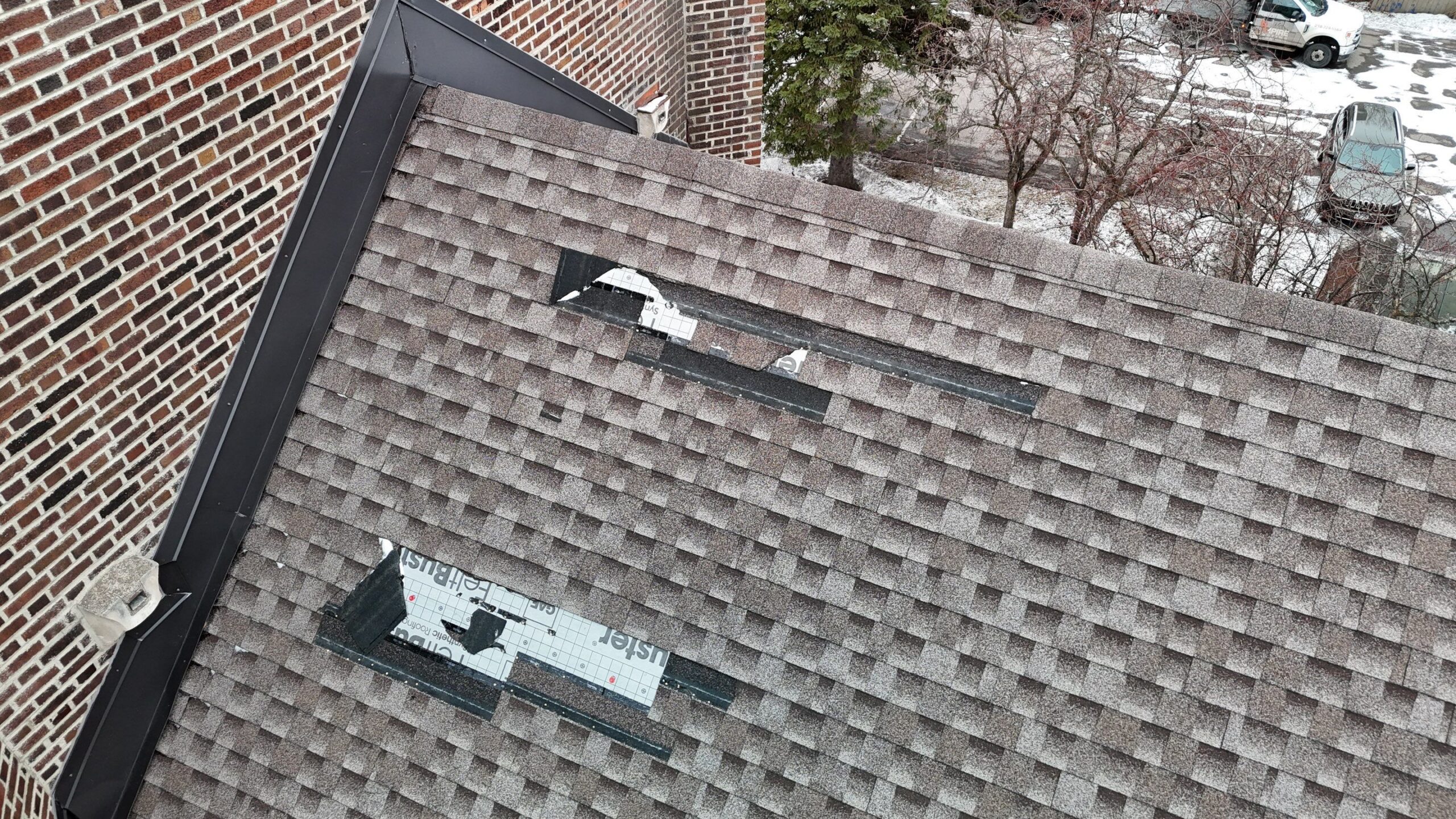
Storm damage in Minnesota can leave you unsure whether you need a roof repair, full replacement, or a deeper inspection. A roof storm damage insurance claim in Minnesota starts with proper documentation, a professional roof inspection, and a thorough review of your insurance policy.
This guide explains what to do after a storm damages your roof, including what damage you can spot yourself, what needs a professional roofer’s eye, how the insurance claim typically works, and how a roofer’s role differs from what your insurance adjuster’s role involves. By the end of this guide, you will have a clear picture of the storm damage insurance process before you make a single phone call.
At Empire Roofing, we’ve walked Duluth and other Northern Minnesota homeowners through a structured and clear process. Schedule a roof inspection and get clear, honest answers from a local roofing company in Minnesota.
What to Do After a Storm Damages Your Roof
It’s always important to start inspecting your home with safety in mind. If there are fallen power lines, major tree damage, an active water leak near electrical fixtures, or structural concerns, don’t approach the area. Call an emergency service first. Once your home is safe, document any damages you can see from the ground.
Write down the date when the storm happened, take photos of visible roof damage, gutters, siding, window screens, fallen tree branches, and interior water leaks. Minnesota Commerce also advises homeowners to contact their insurance company right away, and keep the policy and claim number handy. It’s also important to document any storm damage before a professional roof clean-up, and keep any receipts for temporary home repairs.
Common Signs of Storm Damage on a Roof
Some storm damage is visible from your yard and you don’t need to climb a ladder to get a first look on your roof. Here are a few signs of storm damage on a roof that you can see from the ground and from your windows:
- Dented or dinged gutters, downspouts, and roof vents.
- Shingle granules collected near your downspouts or in the yard.
- Small pieces of shingle or roofing debris on the lawn or driveway.
- Water stains on ceilings or walls.
- A leaning or shifted chimney.
- Damaged siding, soffit, or dented window screens.
If you notice any of these warning signs, it likely means your roof took a hit and it should be checked by a professional roofing contractor before the next rain, snow, or wind storm arrives.
What Needs a Professional Roof Inspection
A professional roof inspection gives you a better look at your roof’s condition after storm damage. A licensed roofer can safely access your roof, closely check its surface, and document damage that may be otherwise hard to check from the ground.
After storm activity in the Northland, a trusted roofer may look for hail marks, torn seal strips, damaged flashing, damaged vents, and signs of water movement. Cracked seals, damaged flashing, and small fractures in the shingle mat also fall into the same category. A trained roof professional knows what storm damage signs to look for, how to document it, and help guide you through the process of roof storm damage insurance claims in Minnesota.
Should You File a Claim Before or After a Roof Inspection?
You should schedule a professional roof inspection first. In Minnesota, this step isn’t just a recommendation, it’s a part of the right structure of a storm damage insurance claim process. The roof inspection helps you understand if there is enough storm-related damage before filing for the insurance claims process.
A professional roof inspection also gives you a well-documented and accurate record tied to the actual storm, which strengthens your position before filing the claim. It also tells you whether the damage clears your deductible, since filing an insurance claim for storm damage that doesn’t exceed it won’t help you financially, but will still put a claim on your record.
How Roof Storm Damage Insurance Claims Work in Minnesota
Every insurance company has its own process, and your specific policy controls what is covered on your storm damage insurance claim in Minnesota. Most storm damage roof claims follow a similar structured path from documentation to roof repair or replacement.
| Step | What it Involves | Why it Matters |
|---|---|---|
| 1. Document the storm damage | Take photos, note the storm date, and save any receipts. | Creates a clear record before cleanup begins. |
| 2. Schedule a Roof Inspection | A roofer checks for wind, hail, impact, and leak-related damage. | Helps you decide whether filing for insurance makes sense. |
| 3. Contact your Insurer | Report the loss and follow claim instructions. | Officially starts the official claim process. |
| 4. Adjuster Review | The adjuster evaluates damage and prepares the claim scope. | Shows damages that the insurer believes is covered by your insurance. |
| 5. Roof Repair or Replace | Your contractor completes approved work and final documentation. | Restores your roofing system covered by your insurance claim. |
Throughout the process, it is also essential to keep all your paperwork in one place so you can compare the inspection findings, adjuster scope, deductible, and roofing estimate side by side.
Understanding Roof Damage Insurance Deductible in Minnesota
An insurance deductible is the amount you should pay out of your pocket for roof repairs or replacement, before your insurance contributes from your covered claim. In Minnesota, homeowners should pay close attention to wind and hail insurance deductibles because they are often different from the standard deductible.
Some policies use a flat deductible, while others use a percentage of the home’s insured value. For example, a two percent wind/hail deductible on a $400,000 home would mean $8,000 out of pocket before the insurance coverage applies. Minnesota’s Department of Labor and Industry notes that state law prohibits contractors from offering to pay, waive, or rebate a customer’s insurance deductible.
What a Roofer Does vs. What the Adjuster Does
Processing a roof storm damage claim in Minnesota means you are working with two people who both inspect your roof, but play different roles. Knowing how a roofer works differently than an adjuster helps you understand whose advice carries what weight.
Your roofer’s role includes:
- Inspects the roof surface and documents damage with photos and proper measurements.
- Provides a detailed repair or replacement estimate.
- Can attend the adjuster’s inspection to discuss any damage that might get missed.
- Files supplements if damage is found after the initial estimate.
Your insurance adjuster’s role includes:
- Represents the insurance company during the insurance process, not you.
- Inspects the property and writes the official “scope of loss”.
- Determines what the insurer will pay and whether it’s a repair or replacement.
- Applies your insurance deductible and coverage type to the payout.
Neither role can replace the other. A professional roofer supports the insurance claims process with clear documentation and helps coordinate with your insurance adjuster. On the other hand, the adjuster evaluates the documentation and helps the insurance company decide the claim based on your policy and the findings.
Why the Right Roofing Company Matters During a Storm Damage Claim
The roofing contractor you select for your roof storm damage insurance claim in Minnesota affects how smoothly the process goes. A roofer who documents the storm damage properly, shows up for the adjuster meeting, and follows through after the repair makes a big difference in how a claim covers what you need. Choosing the right roofing company is entirely yours and your insurer cannot require you to use a specific roofing company.
As a GAF Master Elite contractor, Empire Roofing is a locally owned and trusted company based in Duluth, MN. We’ve been serving all homeowners with roof storm damage throughout Duluth and the surrounding North Minnesota. We offer free roof inspections and understand how storm damage claims work in this area, from the necessary paperwork to the adjuster meeting.
Will filing a storm damage claim raise my insurance premium in Minnesota?
Does insurance cover a full roof replacement or just repairs?
How long do I have to file a storm damage claim in Minnesota?
Roof Storm Damage Insurance Claim Minnesota FAQs
Will filing a storm damage claim raise my insurance premium in Minnesota?
Filing a single weather-related storm damage claim does not raise your individual insurance premium, as insurers typically can’t single out one policyholder for a natural event. Meanwhile, insurance rates can rise area-wide after a major storm, though, and multiple claims within a few years can influence your premium or insurance renewal.
Does insurance cover a full roof replacement or just repairs?
A roof storm damage insurance claim can cover both roof replacement and repair, but it depends on the extent of the damage, your roof’s age, and whether matching shingles are still available. Your coverage type matters as well. From the National Association of Insurance Commissioners, a Replacement Cost Value pays the full replacement cost minus your deductible, while Actual Cash Value pays a depreciated amount, which leaves a larger gap on older roofs.
How long do I have to file a storm damage claim in Minnesota?
The time limit to file a roof storm damage insurance claim in Minnesota depends on your coverage. Your own policy may set a “suit against us” limitation period, commonly one year from the date of loss for hail damage under Minnesota law. If you’re unsure of your policy’s storm damage deadline, our team of licensed roofers can help you review it.
Get Clear Guidance After Roof Storm Damage in Minnesota
A storm damage claim can be overwhelming but it doesn’t have to be complicated. Once you know what damages to look for and how a professional roof inspection helps you get started, you’re in a much stronger position than most homeowners.
If a recent storm has left you wondering about your roof’s condition, our team will have professional eyes check on it. Contact Empire Roofing to schedule a roof inspection. Our team handles inspection with safety, proper storm damage documentation, helps you review your deductible, and coordinate with your insurance adjuster to maximize your coverage.