
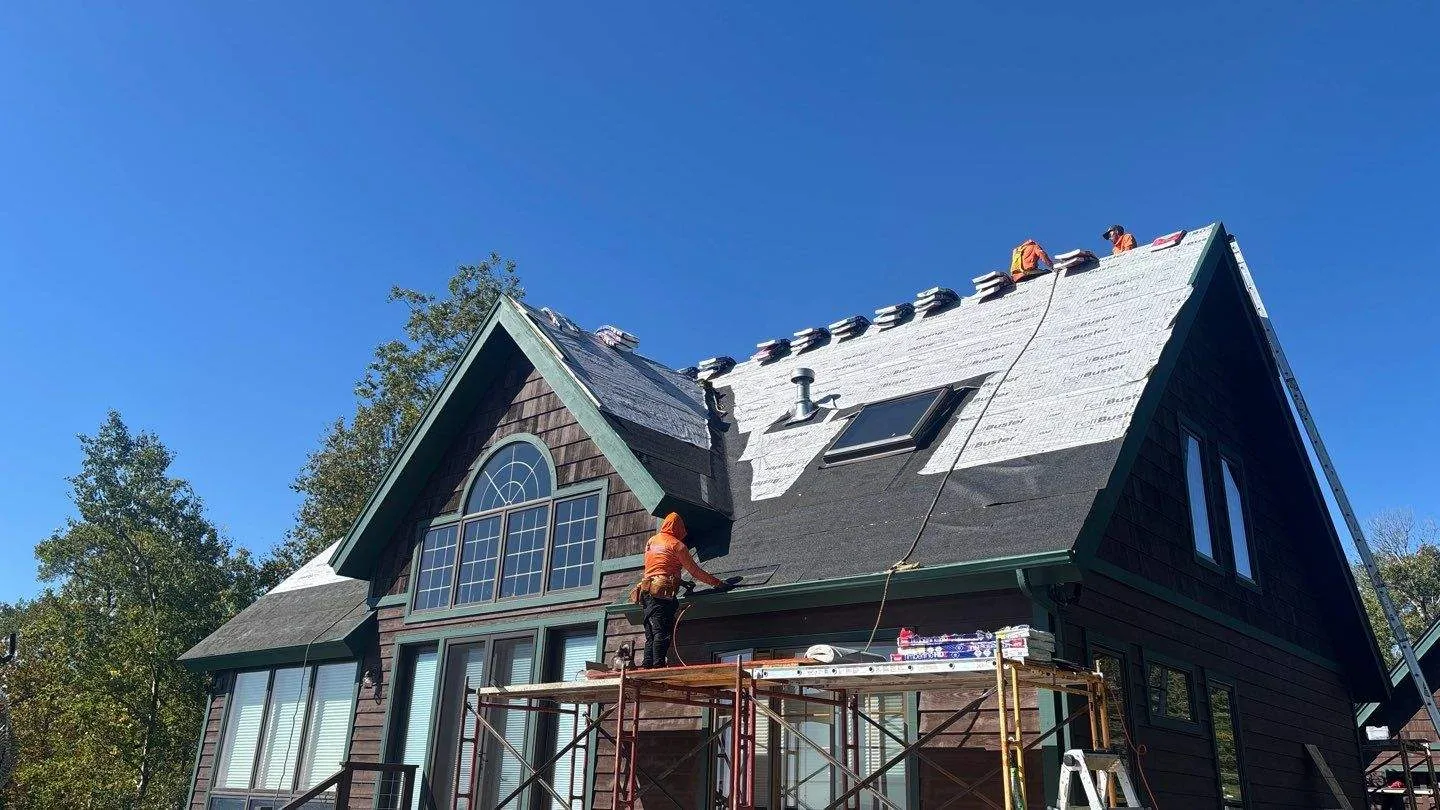
By Empire Roofing
Qualified Minnesota roofing contractors hold GAF Master Elite certification, a distinction Empire Roofing has carried as the only contractor north of the Twin Cities to earn it. Winter-ready expertise requires proven experience with ice dams, heavy snow loads, and subzero installations. Empire Roofing has served Northland homeowners since 1999, backing work with strong manufacturer warranties and verified five-star reviews.
Key Takeaways
Minnesota winters demand contractors with 26+ years of local experience serving Duluth and the Northland.
Licensed and insured roofing professionals understand Minnesota building codes and winter-specific installation requirements.
Empire Roofing’s 200+ five-star reviews prove our expertise handling heavy snow, ice dams, and freezing conditions.
Qualified contractors complete apprenticeships and dual training to properly address Minnesota’s extreme seasonal weather challenges.
Why Does Minnesota Demand Specialized Roofing Skill?
Minnesota’s climate punishes roofing systems in ways few other states match. Heavy snow loads, ice dams, freezing rain, and high winds combine each winter to stress shingles, flashing, and underlayment beyond normal wear. These conditions do not strike occasionally. Thousands of Minnesota homeowners deal with winter roof damage caused by extreme weather every single year. A roof built without cold-climate expertise faces a shorter service life and a higher risk of mid-winter failure.
Ice dams alone illustrate the problem. Snow melts near a warm attic, refreezes at the colder eave, and forces water backward under shingles. Freezing rain adds another layer of weight and moisture intrusion, while sustained high winds test every seam and fastener. A properly trained roofing contractor anticipates each of these failure points before the first snowfall.
What Makes a Roofing Team Qualified for Minnesota Winters?
Qualification means more than a business license. Homeowners benefit most from crews that are licensed, insured, and held to the highest industry standards recognized across the roofing trade. Experience matters just as much as credentials.
Consider what separates a seasoned regional contractor from a general handyman crew:
Track record through repeated cold seasons — Empire Roofing brings more than 26 years of experience serving Duluth and the Northland, a span covering dozens of harsh Minnesota winters.
Familiarity with ice-dam and wind-load behavior, gained from direct exposure rather than manuals.
Verified licensing and insurance, protecting homeowners from liability during storm-related repairs.
A duluth roofing contractor with decades of local winter exposure understands how Minnesota conditions behave differently than milder climates. That understanding translates directly into fewer emergency calls once temperatures drop and snow begins to accumulate.
What Licensing Should a Minnesota Roofer Hold?
Minnesota law requires proper licensing and insurance before any contractor sets foot on a residential roof. A qualified roofing contractor carries both credentials from day one, protecting homeowners from liability if an accident occurs mid-project. Skipping this step leaves property owners exposed to unpaid medical bills or property damage claims that a licensed crew would otherwise cover.
Coverage matters as much as the license itself. Every job should include full liability protection. Workers’ compensation for crew members working at height, particularly during Minnesota’s ice-heavy winters when falls and equipment accidents become more likely. Homeowners who hire uninsured crews assume that risk personally, often without realizing it until damage occurs.
How Can Homeowners Verify a Roofer’s License?
Minnesota’s Department of Labor and Industry maintains the official system for license verification, application, and renewal. The department’s online platform, called iMS, allows homeowners to confirm a contractor’s status before signing any contract. Checking this record takes only a few minutes and prevents costly disputes later.
Do Manufacturer Certifications Matter?
Certifications from manufacturers such as GAF signal a deeper commitment to installation quality and long-term dependability. These credentials require ongoing training and adherence to strict standards, not just a one-time sign-up. A Duluth roofing contractor holding GAF Master Elite status, for instance, stands apart from competitors who lack that recognition anywhere north of the Twin Cities.
Before hiring, homeowners across Minnesota should confirm the following:
Active state license, verifiable through the Department of Labor and Industry
Proof of liability insurance and workers’ compensation coverage
Manufacturer certifications relevant to the roofing system being installed
A track record specific to cold-climate installation challenges
How Do Winter Conditions Test Roof Quality?
Freeze-thaw cycles, ice dam pressure, and heavy snow load reveal roofing weaknesses that summer weather never exposes. Across Minnesota, subzero temperatures, freezing rain, and high winds push shingles, flashing, and underlayment past their normal limits. A roof that looks sound in October can develop hidden stress points by January.
A thorough inspection checks closely for storm damage, ice dam stress, and the cumulative toll that heavy snow and repeated freeze-thaw cycles take on a roofing system throughout the season. This close review matters
What Credentials Signal a Trustworthy Contractor?
Longevity separates a dependable roofing contractor from a seasonal operator chasing storm work. A company with more than 26 years serving Minnesota homeowners, in business since 1999, has weathered decades of harsh Northland winters and knows how regional weather patterns stress a roof over time. That track record matters more than a slick sales pitch when ice dams and freeze-thaw cycles are on the line.
Verified customer feedback offers another reliable signal. Five-star ratings built from genuine Google reviews left by real Duluth-area homeowners carry more weight than testimonials posted on a company’s own website. They reflect independently confirmed experiences rather than curated marketing copy.
Does experience with roof inspections actually matter?
Inspection history reveals how well a contractor understands regional roof conditions. A firm that has inspected roofs across Duluth. The surrounding Northland for more than 25 years has likely seen every failure pattern common to Minnesota’s climate, from ice-dam intrusion to wind-lifted shingles.
Can one contractor handle different roof types?
A qualified regional duluth roofing contractor should repair every common roof system, not just one. Look for documented capability across asphalt shingle, metal, and apartment commercial roofing, since Minnesota properties span all three.
Warranty strength rounds out the credential checklist. Full replacements and repairs should carry strong manufacturer-backed warranties, giving homeowners across the Duluth area long-term protection rather than a short grace period.
Before hiring, homeowners should confirm:
Years of continuous local operation
Independently verified review history
Multi-material repair and inspection experience
Manufacturer warranty coverage on completed work
When Should You Call for Storm Damage Repair?
A Minnesota homeowner should call for storm damage repair as soon as hail, high wind, or fallen debris strikes the property. Waiting turns a minor fix into a larger problem, since exposed roof decking invites water intrusion during the next storm cycle. A roofing contractor specializing in storm response evaluates hail bruising, lifted shingles, and impact points from branches or debris before minor damage spreads into structural decay.
Not every roof issue traces back to a storm, though. Missing shingles and small leaks sometimes develop from age or wear rather than weather events. These situations still warrant prompt repair rather than a wait-and-see approach.
How can homeowners tell if a storm actually damaged their roof?
Determining a roof’s true condition starts with reviewing wind speed. Hail size data from storms the property has already weathered. When a roof has faced storm intensity beyond normal wear. Tear, a close-up inspection is the recommended next step to confirm whether damage occurred beneath the surface.
Minnesota’s storm patterns make this evaluation especially important given how quickly hail and wind events accumulate hidden wear.
What should a homeowner do first after a suspected storm hit?
Homeowners can request access to historical weather data for their property. This information reveals recent storm activity affecting their specific address. A qualified duluth roofing contractor serving the Northland can pull this report at no cost, giving homeowners a clear starting point before scheduling a full inspection.
Confirm the property fell within a recent storm’s path
Request a close inspection if conditions exceeded normal wear
Address leaks or missing shingles promptly, storm-related or not
FAQ
What certification makes Empire Roofing qualified for Minnesota winters?
Empire Roofing holds GAF Master Elite certification, a distinction it carries as the only contractor north of the Twin Cities to earn it. This credential reflects proven expertise in winter-ready roofing installations.
Why does Minnesota’s climate require a specialized roofing contractor?
Minnesota winters bring heavy snow loads, ice dams, freezing rain, and high winds that stress shingles, flashing, and underlayment beyond normal wear. Contractors without cold-climate expertise risk shorter roof lifespans and mid-winter failures.
Is Empire Roofing licensed and insured for winter roofing work?
Yes, Empire Roofing is licensed and insured, meeting Minnesota’s legal requirements for residential roofing work. This protects homeowners from liability during storm-related repairs and winter installations.
Conclusion
In closing, Minnesota’s winter demands roofing contractors who combine technical mastery with proven local experience. A qualified contractor demonstrates rigorous licensing and insurance compliance, maintains current knowledge of cold-climate installation methods, and delivers transparent communication throughout every project. The most reliable partners are those with established track records in the region—contractors who understand the specific challenges of freeze-thaw cycles, heavy snow loads, and ice dam formation because they have navigated these conditions across multiple seasons. Your roofing investment deserves expertise grounded in genuine Northland experience and an unwavering commitment to quality craftsmanship.