
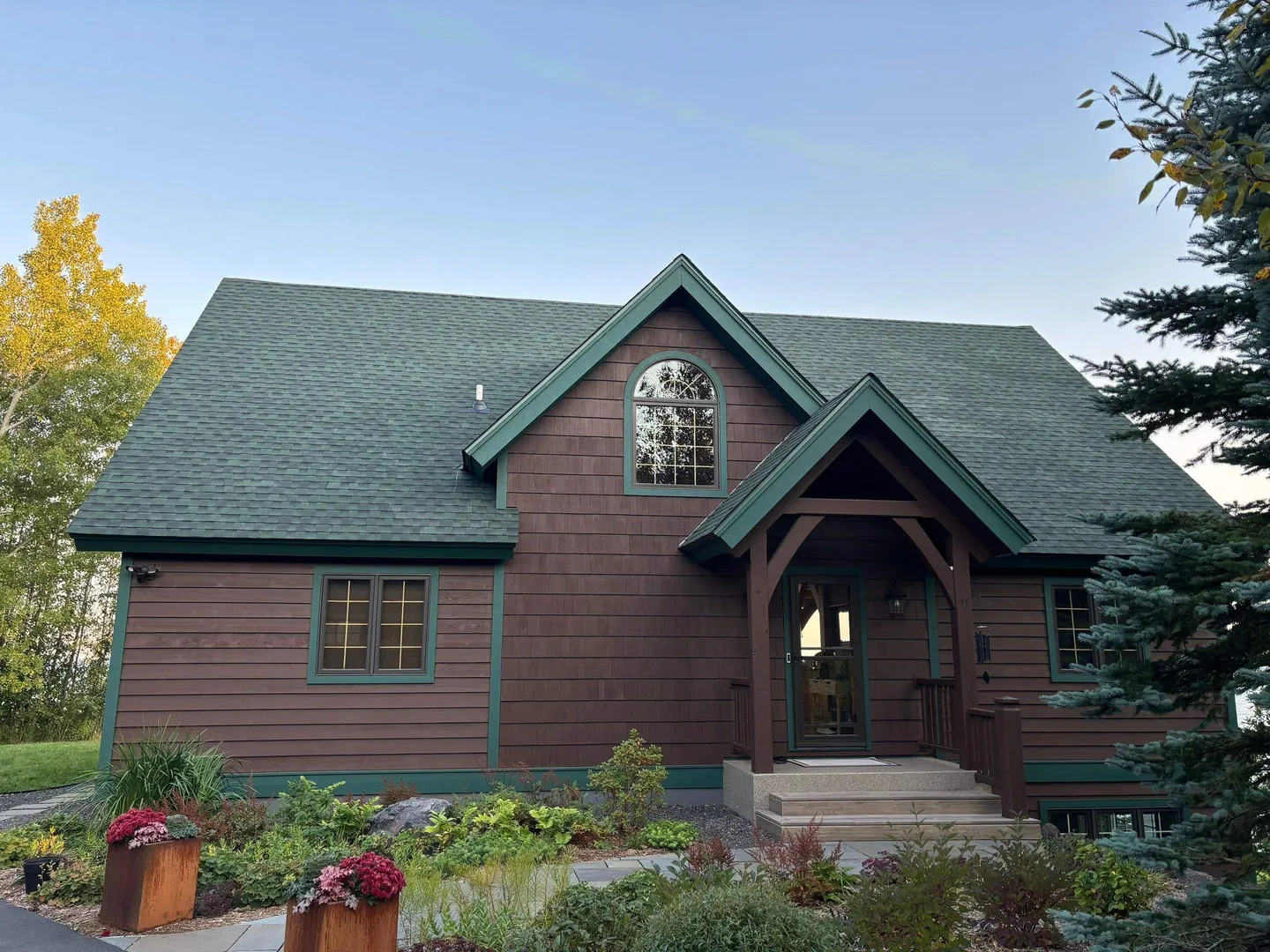
Straight answers on roofing costs, storm damage, insurance claims, seasonal care, and how to choose a contractor in the Northland. No fluff, no pressure – just what homeowners here actually need to know.
Free Download: The Ultimate Guide to Roofing in Duluth & the Northland
Straight answers on roof costs, storm damage, insurance claims, and choosing a contractor, from Duluth’s only GAF Master Elite roofer. No email required.
Roofing in the Northland, Explained
A roof in Duluth works harder than a roof almost anywhere else. It carries months of heavy snow, survives hail and straight-line winds off Lake Superior, and rides out freeze and thaw swings that pry at every seam and fastener. When something goes wrong, the decisions come fast and the dollar figures are real.
This guide is written to give you honest footing before you spend a cent. It covers what a new roof actually costs in the Duluth area, how to spot storm damage, how Minnesota insurance claims really work, the seasonal threats unique to the Northland, and how to tell a trustworthy contractor from a storm chaser. We have protected homes here since 1999, and we wrote this the way we would explain it to a neighbor across the kitchen table.
KEY TAKEAWAYS
- Budget realistically. Most Duluth-area roof replacements run from $8,000 to $18,000 or more, driven by size, pitch, material, and the condition of the wood underneath.
- Sudden storm damage is often covered. Hail and wind damage are typically claimable, while gradual wear and age are not. Documentation is everything.
- Minnesota law protects you, and binds your contractor. A roofer cannot legally pay or rebate your insurance deductible in this state.
- Ice dams are the Northland’s signature roof threat. They start with heat escaping your attic, not with the roof itself, which is why ventilation and insulation matter as much as shingles.
- Certification and a local track record matter more than the lowest bid. Verify the license, the insurance, and the manufacturer credential before you sign.
What a New Roof Costs in Duluth
QUICK ANSWER
Most residential roof replacements in the Duluth area run from $8,000 to $18,000 or more. Your price depends on the size and pitch of the roof, the material you choose, how many old layers come off, and the condition of the wood underneath. The only way to know your real number is an in-person inspection and a written estimate.
There is no honest flat price for a roof, and any company that quotes one over the phone is guessing. Two houses on the same Duluth street can differ by thousands of dollars, based on details you cannot see from the curb. What you are really paying for is square footage, complexity, materials, and the labor to do it right in a climate that punishes shortcuts.
Here are the factors that move the number the most:
| COST FACTOR | WHY IT MATTERS |
|---|---|
| Roof size | Priced by the square (100 square feet). A larger footprint means more material and more labor. |
| Pitch and complexity | Steep roofs, multiple valleys, dormers, and skylights slow the work and raise the cost. |
| Material choice | Asphalt shingles sit at the affordable end. Metal and premium architectural shingles cost more but last longer. |
| Tear-off and layers | Removing multiple old layers adds labor and disposal. Decking that has rotted must be replaced. |
| Underlying condition | Damaged sheathing, soft decking, or failed flashing is found at tear-off and adds to the scope. |
| Warranty level | Top-tier manufacturer warranties require certified installation, which reflects in both quality and price. |
How materials compare
Material is the single biggest lever you control. This is the general picture for the Duluth market, not a quote:
| MATERIAL | RELATIVE COST | TYPICAL LIFESPAN | BEST FOR |
|---|---|---|---|
| Asphalt shingles | Most budget-friendly | 25 to 35 years | Most Northland homes; strong value and proven performance |
| Architectural shingles | Mid-range | 35 to 50 years | Better wind and impact resistance with a dimensional look |
| Standing-seam metal | Premium | 40 to 70 years | Shedding snow, longevity, and low long-term maintenance |
The cheapest bid is rarely the cheapest roof. A correctly installed, properly ventilated roof from a certified crew protects you from the repeat repairs and premature failures that make a deal expensive later. If budget is the hurdle, flexible financing often makes more sense than stretching a roof past its limit. You can compare asphalt shingle and metal roofing options in detail on our site.
Want your real number instead of a range?
Free inspection, written estimate, no pressure.
Storm Damage: What to Look For, What to Do
QUICK ANSWER
After a hail or wind event, check for missing or curled shingles, granules collecting in gutters, dented vents and flashing, and water stains inside. A lot of storm damage is invisible from the ground, so the safe (and smart) move is a free professional inspection before the damage lets water reach the structure.
Northland storms do their damage in two main ways. Hail bruises and cracks shingles, knocking off the protective granule layer and shortening the life of the roof even when no panel is missing. Straight-line winds lift, crease, and tear shingles, and they drive rain under whatever they loosen. The trouble is that the most expensive damage is often the hardest to see.
Signs worth a closer look
- Shingles: missing, cracked, curled, or creased shingles, especially on the storm-facing slope.
- Granules: piles of sand-like granules in gutters and at downspout outlets after a hailstorm.
- Metal: dents or dings on gutters, vents, flashing, and your AC unit, which often mirror what hit the roof.
- Interior: new water stains on ceilings, around chimneys, or in the attic after a storm.
What to do after a storm
- Stay safe and document from the ground. Photograph any visible damage and note the date of the storm. Do not climb onto a wet or steep roof.
- Get a professional inspection. A qualified roofer can safely assess the roof and tell you honestly whether you have damage that rises to a claim.
- Make temporary protection only if needed. If water is actively entering, limit interior damage, but leave the roof assessment to the pros.
- Keep your paperwork together. Storm date, inspection report, and photos become the backbone of any insurance claim.
Timing matters. Insurance covers sudden storm damage, not gradual wear, so a documented inspection close to the storm date strengthens your position. Empire Roofing has handled storm damage and insurance work for Duluth-area homeowners for over two decades, and we inspect for free.
Roofing Insurance Claims in Minnesota
QUICK ANSWER
In Minnesota, sudden storm and hail damage to your roof is usually covered by homeowners insurance, while age and wear are not. You pay your deductible, and your contractor cannot legally cover or rebate it. Start with a professional inspection to document the damage before you file.
The claims process feels intimidating mostly because the language is unfamiliar. Once you understand a few terms and the order of steps, it becomes manageable. The most important distinction your insurer will make is between sudden, accidental damage from a storm, which is covered, and damage from age, neglect, or wear, which is not.
Know how your policy pays: RCV vs ACV
| TERM | WHAT IT MEANS FOR YOU |
|---|---|
| Replacement Cost Value (RCV) | Pays the full cost to replace the roof, typically in stages, without subtracting for age. The stronger coverage for homeowners. |
| Actual Cash Value (ACV) | Pays the depreciated value, subtracting for the age and wear of the roof. You cover the difference out of pocket. |
| Deductible | The amount you are responsible for before coverage applies, commonly in the $250 to $1,000 range, set by your policy. |
MINNESOTA LAW
Your contractor cannot pay your deductible. Minnesota law prohibits contractors from covering, rebating, or absorbing your insurance deductible on a claim. Any roofer who offers to eat the deductible or waive it is asking you to take part in something illegal, and it is a clear red flag. You can read the rule directly from the Minnesota Department of Labor and Industry.
The claim process, step by step
- Get a documented inspection. Have a storm-experienced roofer inspect and document the damage with photos, the probable storm date, and a clear scope.
- File your claim. Contact your insurer and open a claim. They will ask for the storm date and the type of damage, then assign an adjuster.
- Meet the adjuster. Your roofer should be present for the adjuster’s inspection so nothing is missed and the damage is fairly represented.
- Review the scope and settlement. The insurer issues an estimate. Your contractor compares it against the true scope and flags anything left out.
- Complete the work and final billing. Once approved, the work is done to the agreed scope, and any held depreciation is released to you under an RCV policy.
A good contractor does not work against your insurer. We work directly with your adjuster to make sure the damage is documented accurately and the settlement is fair. Our full storm damage and claims process walks through this in more detail.
Worried your roof has been damaged by a recent storm? Don’t wait to find out!
We document the damage and work with your adjuster.
Seasonal Roofing in the Northland
QUICK ANSWER
The Northland’s biggest seasonal roof threats are ice dams and snow load in winter, and freeze-thaw stress year-round. Duluth averages more than 80 inches of snow a year, so ventilation, insulation, and a sound roof matter more here than almost anywhere. The best time frame to replace a roof runs from late spring through early fall.
Roofing in Duluth is a seasonal discipline. The same roof faces blistering summer sun, autumn rain, and a long winter that loads it with snow and works it through repeated freeze and thaw cycles. Knowing what each season does to your roof helps you stay ahead of problems instead of reacting to them.
Ice dams: the Northland’s signature problem
An ice dam forms when heat escaping your attic melts the snow on the upper roof, the meltwater runs down to the cold eaves and refreezes, resulting in a ridge of ice buildup. Water then pools behind that ridge and works its way back up under the shingles, where it can leak into walls and ceilings. The key insight is that ice dams usually start inside the house, not on the roof. The real fixes are attic insulation, proper ventilation (to keep the roof deck cold and even), and quality underlayment at the eaves.
Snow load and freeze-thaw
Heavy, wet snow is weighty, and it accumulates over months in Duluth. A sound roof structure handles it, but weak spots and poor framing show themselves under load. Freeze-thaw is the quieter threat: water seeps into small gaps, freezes, expands, and slowly enlarges cracks in shingles, flashing, and seals. Years of this cycle is what ages a Northland roof faster than the sun ever will.
LOCAL TIP
Inspect in spring and fall. A spring check catches winter damage before the rainy months, and a fall check makes sure the roof is sealed and ready before the snow flies. Two quick looks a year prevent most expensive surprises.
The best time to replace a roof here
Late spring through early fall offers the most reliable weather for a clean tear-off and install, which is why those months book up fast. That said, an experienced Northland crew can install in colder conditions when needed, using cold-weather techniques and hand-sealing where appropriate. If your roof is failing in January, you do not have to wait until June, but you do want a crew that knows how to do it right in our climate. Empire serves Duluth and the surrounding Northland through every season, with experienced master roofers who know the ins and outs of every season.
How to Choose a Roofing Contractor in Duluth
QUICK ANSWER
Verify the contractor’s Minnesota license and insurance, look for a top-tier manufacturer certification such as GAF Master Elite, and choose a company with a real local track record and written estimates. Be wary of out-of-town storm-chasers who knock on doors, pressure you to sign, or offer to waive your deductible.
The roof is one of the largest investments most homeowners make, and the wrong contractor turns it into a recurring headache. The good news is that the right questions sort the professionals from the rest quickly.
What to verify before you sign
- License: confirm a valid Minnesota contractor license. Empire’s license number is BC574373. You can verify any roofer through the state.
- Insurance: require proof of both liability insurance and workers’ compensation, so you are not exposed if someone is hurt on your property.
- Manufacturer certification: a credential like GAF Master Elite is earned by fewer than two percent of contractors and unlocks the strongest warranties. Empire is the only GAF Master Elite contractor north of the Twin Cities.
- Local track record: look for years in the community and a deep bank of verified local reviews, not a brand-new profile that appears right after a storm.
- Written everything: a detailed written estimate and a clear scope protect both sides. Vague verbal promises do not.
RED FLAGS
Watch for the storm-chaser pattern. High-pressure door-knocking right after a storm, an out-of-state address, demands for large upfront cash, no verifiable license, and offers to waive your deductible are all warning signs. Reputable local contractors do not need these tactics.
Hiring one trusted local team that stands behind its work, season after season, is worth more than a one-time low bid from a company that may be three states away by spring. Learn more about Empire Roofing and the standard we hold on every job.
Get an Honest Assessment of Your Roof
Whether your roof is storm damaged, aging out, or you just want peace of mind before winter, the next step is simple. Schedule a free inspection and get a straight answer from the team Duluth has trusted since 1999. We serve Duluth, Hermantown, Proctor, Cloquet, Two Harbors, Superior, and the surrounding Northland, and there is never any pressure or obligation.
Book your free roof inspection today.
Honest assessment. Written estimate. No pressure.